Sale
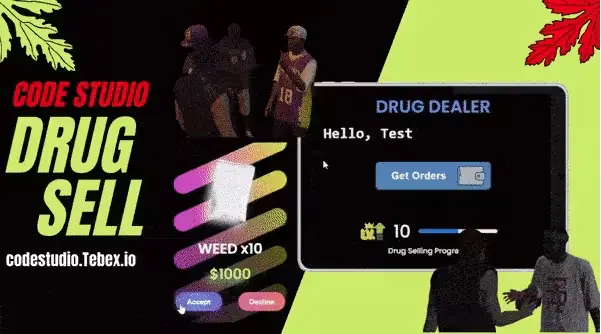
Drug Selling With Level Progression
$50.00
$30.00
Dealers level up into bigger zones and better drug prices
Lifetime updates
A drug economy is a loop: something is grown or cooked, turned into a sellable item, moved to a buyer, and the money is washed before it is spent. This shelf holds resources for every step of that loop from several sellers, which means you can build the chain you want instead of buying one system and living with all of its choices.
Dealers level up into bigger zones and better drug prices

One burner phone runs your whole drug network
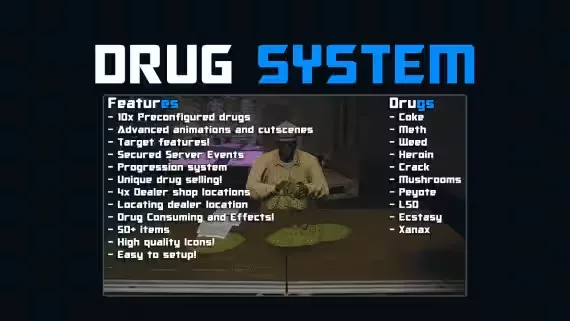
Ten drugs, every interaction run through the target system
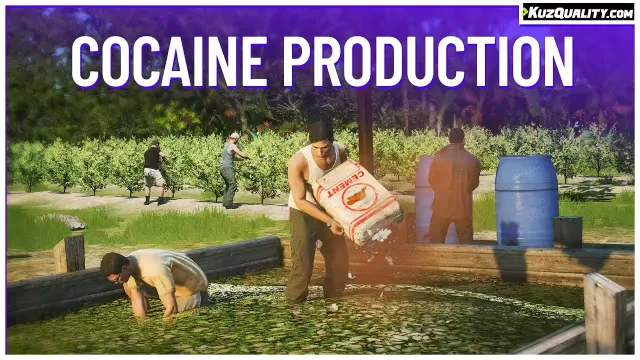
Four-stage cocaine production on its own handcrafted island
17 lightweight YMAP locations, no more teleporting into shells
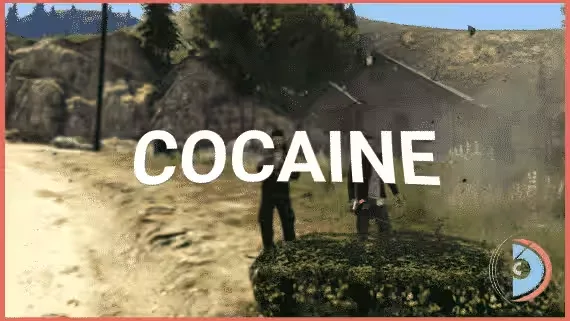
Free full leaf-to-baggy cocaine loop with a microwave mini-game

Runs the whole drug economy from field to auction house
The shortest version is one interaction that produces an item and one that sells it. The longest runs a plantation through drying, processing, packaging and a dealer who haggles, with police dispatch firing on a failed sale. Neither is better. A server with fifty players wants the short loop so the ground is always busy; a server built around organised crime wants the long one so a supply chain is worth defending.
Production resources here cover plant growth, island and warehouse cook labs, and processing packages that convert a raw item into something sellable. The thing to compare is where the work happens. A static lab gives police an address to raid. A portable setup gives the crew somewhere new to move to every week. Some resources support both and let you decide per location.
Selling resources vary most in risk. Some pick a random ped and a random price, others run reputation, levels and territory so the same corner pays more after a month of work. Look for configurable dispatch on a failed sale, because that is the switch that decides whether your police side gets any of this content. Once the cash exists it has to become clean, and the laundering resources on this shelf handle that step.
Almost every resource here registers items, so your inventory resource matters more than your framework. Product pages list which inventories the seller supports, and metadata support is what decides whether a bag of something can carry a quality or a weight rather than being a flat count.
Most register items, so the inventory resource matters. Each product page lists the ones its seller supports. Metadata support is worth checking if you want quality, weight or batch information on an item.
Yes, and that is the usual reason to shop a shelf like this. Keep the item names consistent between the resource that produces an item and the one that sells it, and check that both expect the same inventory.
Only if you enable it. Look for configurable dispatch on failed sales and on raids, and for lab locations that can be found rather than hidden behind a menu. Those settings are what turn a money loop into shared content.